
Croft Gardens London PBSA


Client
King's College Cambridge
Key Services Required
Mechanical and Electrical Engineering
Awards
Project Information
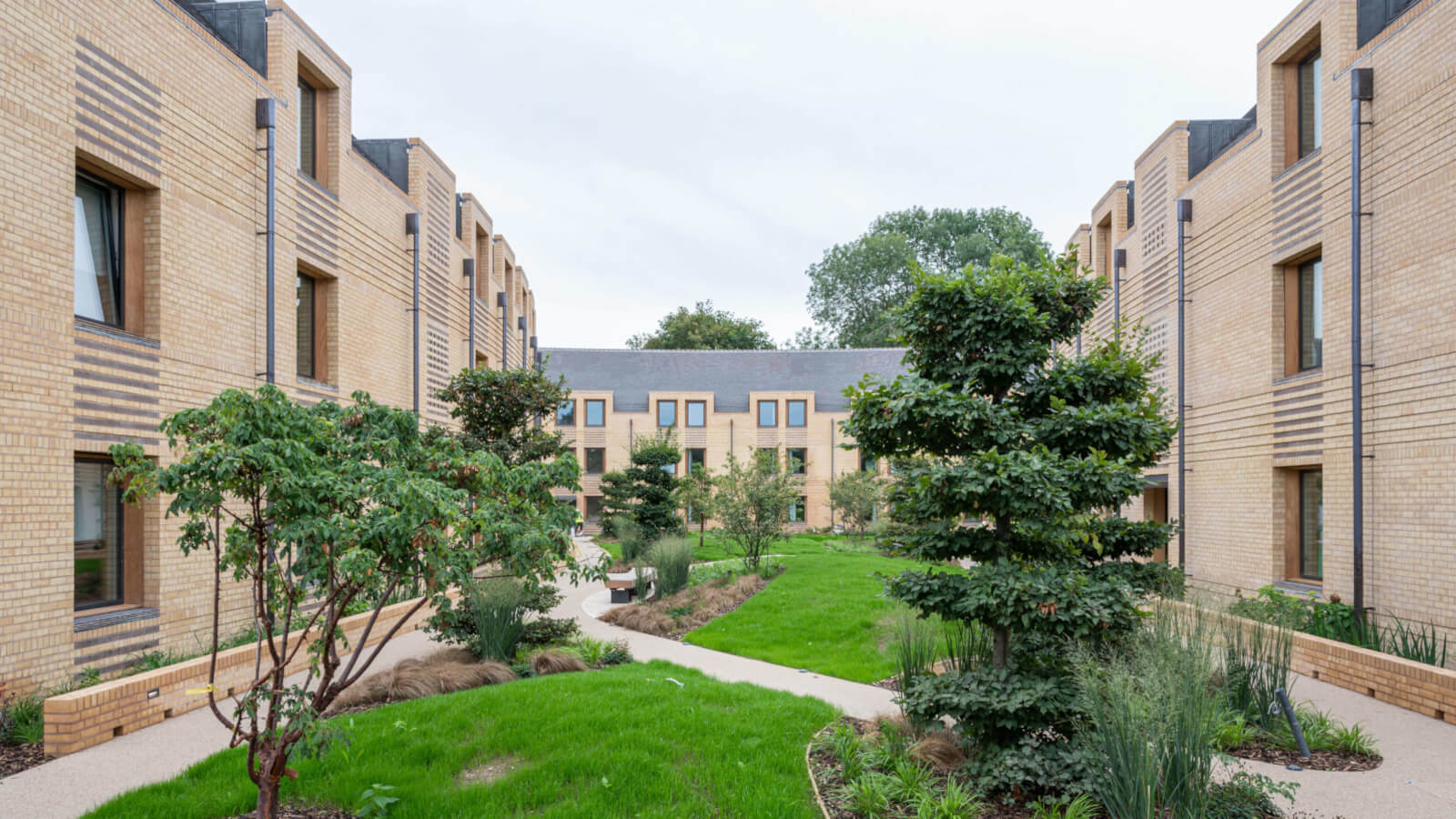
Bennett Freehill acted as Mechanical & Electrical Engineers on behalf of the main contractor on this new student accommodation project which provides 84 new homes for graduates, fellows and their families, as well as generous gardens and communal areas, which complement the Conservation Area setting. The project is composed of three crescent terraces forming an open sided court, a new graduate villa and the refurbishment and extension of an existing Victorian Villa.
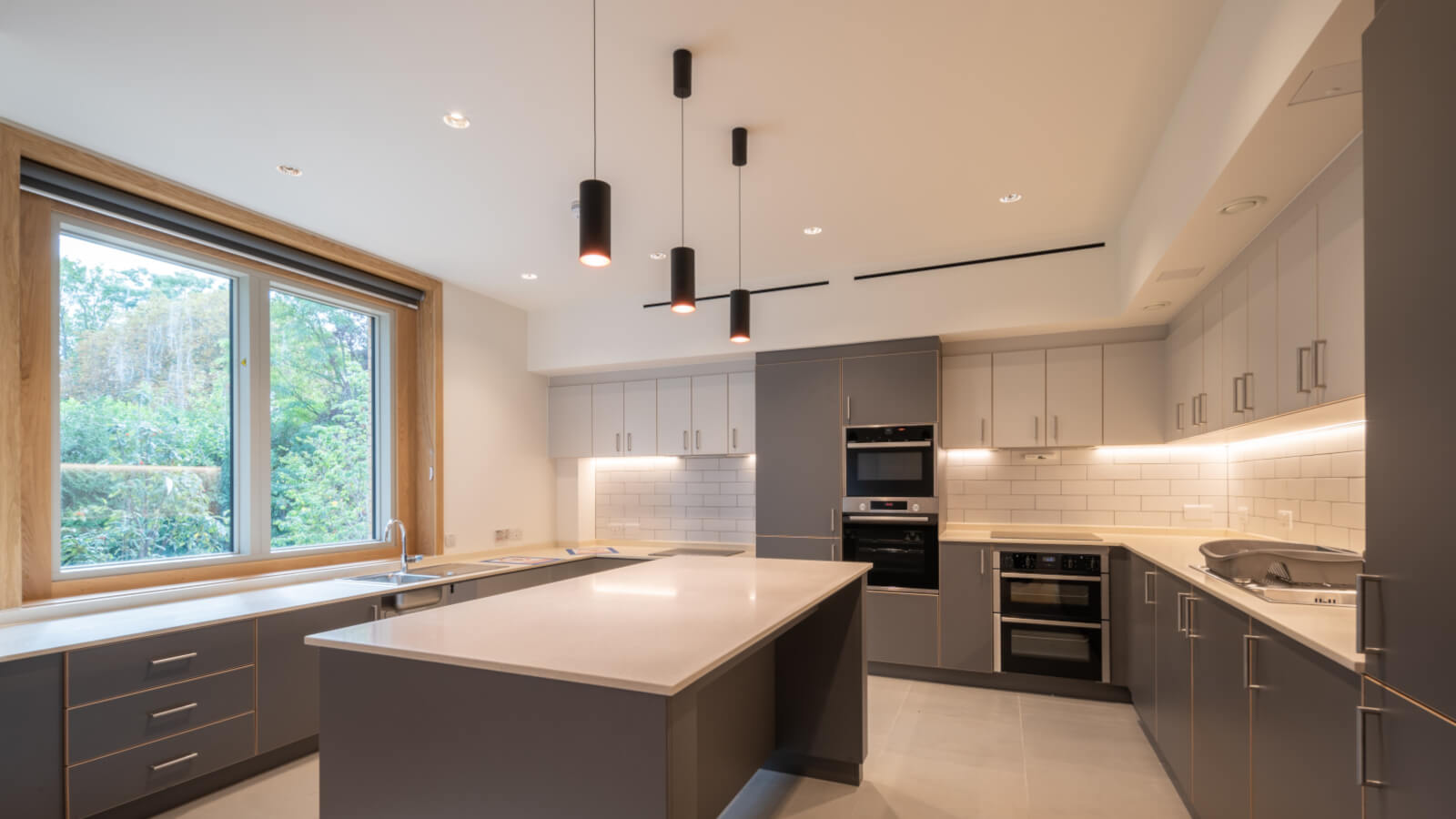
An exemplar approach to sustainability was required as the brief demanded low carbon emissions, passivhaus standards and stipulated that the scheme should be designed for a lifetime of 100 years. It is expected Croft Gardens will be carbon negative for the first 7-10 years of operation, driven in a large part by the embodied sequestered carbon through use of cross-laminated timber (CLT) for its structure, a low-carbon alternative to concrete, and timber as an internal finishing material. We have helped to develop the design to achieve good airtightness and a buildable, high performance thermal envelope.
As the location is too noisy to rely on opening windows for natural ventilation, we developed a strategy that uses ground source heat pumps and a heat exchanger to provide extremely low-energy cooling in summer. The system provides efficient heating in winter and domestic hot water generation.
The site constraints meant several of the buildings have their principal façades facing east and west, which makes effective solar shading difficult. We carried out modelling to advise on minimum glazing ratios that provide good daylight without risking summer comfort and helped to develop the detailed design of these.
Photo Credit: Gilbert Ash
An exemplar approach to sustainability was required as the brief demanded low carbon emissions, passivhaus standards and stipulated that the scheme should be designed for a lifetime of 100 years. It is expected Croft Gardens will be carbon negative for the first 7-10 years of operation, driven in a large part by the embodied sequestered carbon through use of cross-laminated timber (CLT) for its structure, a low-carbon alternative to concrete, and timber as an internal finishing material. We have helped to develop the design to achieve good airtightness and a buildable, high performance thermal envelope.
As the location is too noisy to rely on opening windows for natural ventilation, we developed a strategy that uses ground source heat pumps and a heat exchanger to provide extremely low-energy cooling in summer. The system provides efficient heating in winter and domestic hot water generation.
The site constraints meant several of the buildings have their principal façades facing east and west, which makes effective solar shading difficult. We carried out modelling to advise on minimum glazing ratios that provide good daylight without risking summer comfort and helped to develop the detailed design of these.
Photo Credit: Gilbert Ash